

States We Lend In
Our loan officers are ready and waiting to help you apply for your home loan.

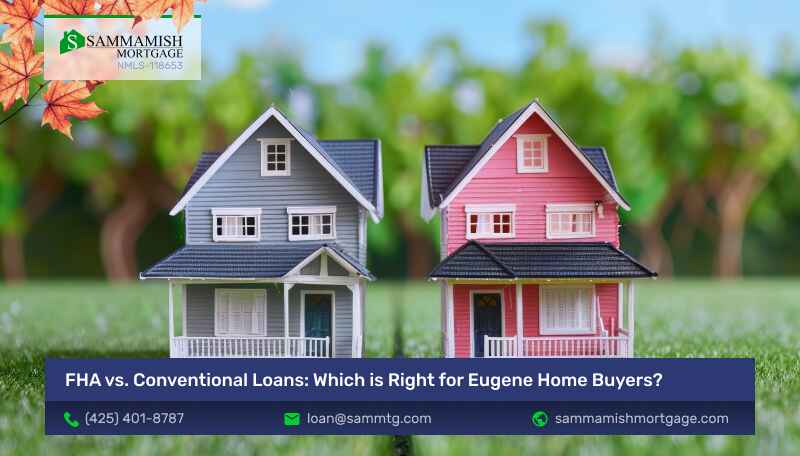
If you’re buying a home in Eugene, OR and comparing FHA vs. conventional financing, the right choice usually comes down to a few practical factors: your credit profile, how much you can put down, how mortgage insurance will affect your monthly payment, and whether the property is likely to meet appraisal and condition standards.
This guide walks through those tradeoffs so you can identify which loan type is more likely to fit your situation.
For borrowers comparing FHA and conventional loans, Eugene’s housing market matters less as a lifestyle choice and more as a financing context. Housing inventory includes a mix of older homes, renovated properties, and newer construction, which can affect appraisal outcomes and repair expectations depending on the loan type.
Recent market snapshots also show an active local market, with 481 homes for sale, 213 new listings, and a median sale-to-list ratio of 1.000. Separate reporting showed Eugene home prices up 0.9% year over year over the three months ending May 2026, with median sale prices reported around the $500K range.
What that means for buyers is fairly simple: loan choice can become more important when you’re balancing budget, property condition, and upfront cash needs.
Let’s switch gears now and talk about financing. Most home buyers in Eugene either use a conventional or FHA loan to finance their purchases.
A smaller percentage of buyers use the VA loan program to purchase a home. But that program is limited to military members, veterans, and certain qualifying spouses.
The rest of this guide will focus on the key distinctions between FHA and conventional loans, in particular. The main difference between them has to do with government involvement.
Most Eugene, Oregon home loans fall into one of these two categories. The VA loan program for military members makes up a smaller slice of the pie.
Here are the most important factors to consider when choosing between an FHA or a conventional mortgage loan in Oregon:
FHA loans in Eugene, OR typically have more flexible credit requirements. This makes them well suited for borrowers with credit-related issues in the past that might have resulted in a lower score.
Technically, you could qualify for the FHA loan program with a credit score as low as 500. But you’ll need a 580 or higher to qualify for the minimum 3.5% down payment.
Conventional loans, on the other hand, generally require a credit score of 620 or higher for approval. This is a general rule; exceptions can be made for otherwise well-qualified borrowers.
The point here is that the FHA loan program is generally more flexible and “forgiving” when it comes to credit histories. And we’ve covered the main reason for this already. These loans are insured by the government, which reduces the lender’s risk.
FHA loans allow a down payment as low as 3.5% of the home’s purchase price, for those with credit scores of 580 or above. This feature appeals to first-time home buyers in Eugene, who often have limited savings to cover the upfront investment.
Conventional loans in Eugene, OR sometimes require a larger down payment, especially for more expensive homes. Some conventional loan programs offer down payments as low as 3%, but those programs are limited to specific groups such as first-time buyers.
If you can afford to make a down payment of 20% or more on a conventional loan, you could avoid paying mortgage insurance. So let’s talk about that next.
Home buyers in Eugene who make a relatively small down payment often have to pay for mortgage insurance. This is true for both FHA and conventional loans, but with some key differences.
Mortgage insurance protects the lender in case the borrower is unable to repay the loan, a situation known as a “default.”
Here are the general rules for both loan types:
FHA loans have specific property requirements to ensure the home is safe and structurally sound. Conventional loans in Eugene, OR tend to be more flexible, making them a good option if the property needs minor repairs that FHA standards might flag.
With an FHA loan, the required home appraisal will determine the market value as well as the overall condition of the property. With a conventional loan, the appraisal focuses solely on the market value.
FHA loans have specific county-based limits, which can be lower than conventional loan limits.
For example, the conventional loan limit for a one-unit property in Lane County, Oregon is $832,750 in 2026, with “jumbo” financing available above that range.
Because FHA loans are backed by the federal government, lenders are more willing to offer favorable terms to borrowers who might not qualify for conventional loans.
Conventional loans are not backed by the government, so you’ll need to have excellent credit and income standards to qualify.
In many cases, FHA financing makes more sense for Eugene buyers who need more flexibility on credit score, have limited savings for a down payment, or want a path to homeownership that is more forgiving overall. Conventional financing often fits buyers with stronger credit, more flexibility in how they structure the down payment, and a desire to avoid or eventually remove mortgage insurance under the right circumstances.
Property choice can also influence the decision. If you’re considering an older Eugene home that may need repairs or have condition issues, it is worth asking early whether FHA appraisal standards could create complications. If your finances support either option, comparing total monthly cost and long-term mortgage insurance impact can help clarify the better fit.
If you’re planning to buy a moderately priced home in Eugene (one that’s close to the median home price), both the FHA and conventional loan options could work. But those home buyers purchasing higher-end properties typically have to use conventional financing.
Sammamish Mortgage can help. We serve clients across Washington, Idaho, Colorado, Oregon, and California. Since 1992, we’ve been providing several mortgage programs and products with flexible qualification criteria to borrowers across the Pacific Northwest. Visit our website to get an instant rate quote or to use our online mortgage calculator. Or, reach out to us if you are ready to get pre-approved for a mortgage.
It depends on your credit profile, down payment, mortgage insurance costs, and the condition of the home you want to buy. FHA financing is often a better fit for borrowers who need more flexibility on credit score or have limited savings for a down payment. Conventional financing often fits buyers with stronger credit, more down payment flexibility, and the ability to avoid or later remove mortgage insurance under the right circumstances.
For many first-time buyers in Eugene, FHA can be appealing because it allows a 3.5% down payment for borrowers with qualifying credit and tends to be more forgiving on credit history. Conventional can still be a strong option for first-time buyers, especially when they have stronger credit and want the possibility of canceling private mortgage insurance later.
FHA loans can be available with a credit score as low as 500, but a score of 580 or higher is typically needed to qualify for the minimum 3.5% down payment. Conventional loans generally require a credit score of 620 or higher, although exceptions can sometimes be made for otherwise well-qualified borrowers.
Possibly. Some conventional loan programs offer down payments as low as 3%, but those programs are usually limited to specific borrower groups such as first-time buyers. Other conventional loans may require a larger down payment, especially on more expensive homes.
If you qualify for FHA’s minimum 3.5% down payment, the required down payment on a $300,000 home would be $10,500. That minimum typically requires a credit score of 580 or higher.
FHA loans require mortgage insurance on all loans, including an upfront premium and an annual premium. Some FHA borrowers pay mortgage insurance for the life of the loan. Conventional loans usually require private mortgage insurance when the loan amount is more than 80% of the home’s value, and that insurance can generally be canceled once the homeowner reaches a qualifying equity level.
FHA often makes more sense when a buyer needs more flexibility on credit score, has limited funds for a down payment, or wants a loan program that is generally more forgiving overall. It can be especially useful for buyers who may not meet typical conventional credit standards.
They can. Eugene has many older homes, and condition-related issues may matter more with FHA financing because FHA has specific property standards intended to ensure the home is safe and structurally sound. Conventional loans are usually more flexible if a property has minor repair issues that FHA standards might flag.
FHA loan limits are set by county, so the limit can vary depending on where the home is located. In this comparison, the key point is that FHA limits can be lower than conventional loan limits, which can matter more for buyers shopping in higher price ranges.
Higher-priced home buyers often use conventional financing because FHA loans have county-based loan limits that may not cover more expensive purchases. Conventional financing also offers higher conforming limits in some cases, with jumbo financing available above those ranges.

Our loan officers are ready and waiting to help you apply for your home loan.
Learn more about the people behind Sammamish Mortgage
Whether you’re buying a home or ready to refinance, our professionals can help.
Mortgage Support — 24/7
No Obligation and transparency 24/7. Instantly compare live rates and costs from our network of lenders across the country. Real-time accurate rates and closing costs for a variety of loan programs custom to your specific situation.
Adjust the parameters based on what you want to track




