States We Lend In
Our loan officers are ready and waiting to help you apply for your home loan.

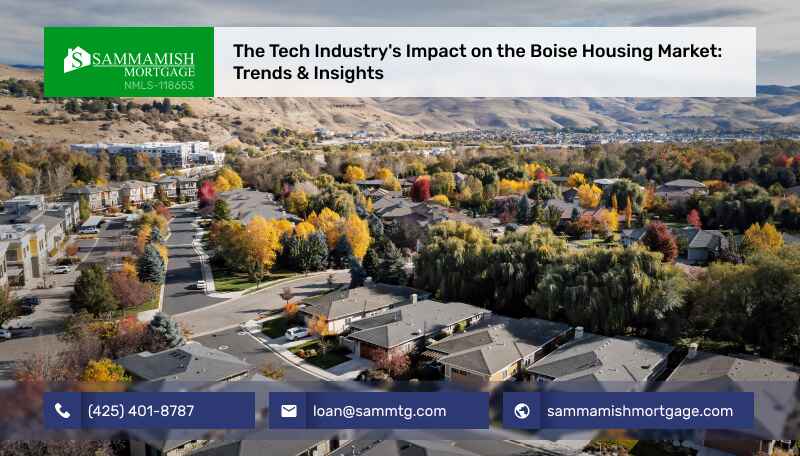
A growing number of tech workers are leaving major coastal cities and finding new opportunities in places like Boise, Idaho. This trend has been going on for a long time, but it accelerated during the COVID pandemic.
As a result of this growth, the Boise real estate market has become increasingly competitive over the past five to seven years—and also more expensive.
In fact, the median home price in Boise rose from around $300,000 in 2019 to an all-time record high of $524,000 during the summer of 2022. That’s an increase of nearly $225,000 in only three years.
The Boise, Idaho housing market has cooled off since then, with a dip in home prices and a slower pace of growth in 2024. But the tech industry’s impact on the Boise housing market still makes it a competitive one for buyers.
The Boise metro area’s population has swelled in recent years, led by a surge in tech jobs.
According to a March 2024 report from Handshake, a career site geared toward students and recent graduates, Boise-area jobs applications increased 116% over the previous 12 months.
But while the tech industry features heavily in this story, there’s more to it. The wave of tech company layoffs from 2022 to 2023 has shifted demographic dynamics. Young people continue to flock to Boise. They’re just seeking a broader range of job types. This is one of the few unique Boise real estate trends that the area has seen in recent years.
“[T]here’s a startup and entrepreneurial culture driving growth, too. Boise today feels like Nashville or Austin two or three decades ago, says Clark Krause, executive director of the Boise Valley Economic Partnership, a regional business organization.”
Many of the younger workers pouring into Boise have relocated from pricier coastal areas like San Francisco. The median home value in the San Francisco Bay Area is well over $1 million in 2024, compared to a median of around $480,000 in the Boise area.
But relative affordability isn’t the only thing drawing new residents. According to the Boise Valley Economic Partnership, growth also stems from “the draw of recreational and cultural amenities occurring simultaneously with the economic pull of strong jobs.”
High-paying tech industry jobs in Boise attract residents from elsewhere in the United States and from abroad. Over the years, this had made the local real estate market more competitive.
But a lot of these housing market trends in Boise faded over the past couple of years. Starting in 2022, higher mortgage rates and home prices slowed real estate in Boise to a crawl. The same thing happened in most parts of the country.
In 2024, the market is starting to favor buyers more so than in the past. While supply levels remain low from a historical standpoint, they’ve improved from the record lows seen during the pandemic. This gives buyers more property choices while easing competition.
Going forward, tight inventory conditions will continue to be the biggest challenge for Boise-area home buyers. Inventory simply hasn’t kept up with population growth, despite gains made over the past year.
According to local officials, the City of Boise requires 2,770 new housing units every year for the next 10 years, to meet the demand from residents. Most of the demand comes from buyers seeking affordable properties, rather than those shopping at the top of the market.
But construction is not keeping up. Over the last three years, housing construction in Boise has produced 4,146 fewer units than needed, according to officials.
Because of this, tech workers in Boise and others who plan to buy a home in the area should be prepared for a lengthy housing search.
Buyers can still succeed in this real estate market. But they might have to make compromises along the way, when it comes to location, home size, and other factors.
The tech industry’s impact on the Boise housing market (and job growth in general) is still evolving.
Over the coming years, this market will return to something resembling normalcy. New construction will help to ease the housing shortage. Population growth will likely slow down. And home prices will rise at a more sustainable pace, compared to the past few years.
Real estate markets change constantly, and Boise is no different. This underscores the importance of advanced research and planning. Whether they’re in the tech industry in Boise or not, home buyers can increase their chance for success by getting the “lay of the land” before entering the market.
If you’re planning on entering the Boise, ID housing market any time soon, we’d love to help. Since 1992, Sammamish Mortgage has been offering a plethora of mortgage options to borrowers across the Pacific Northwest. Check out our website to get an instant rate quote, or reach out to us to get pre-approved for a mortgage and start the process of buying a home!

Our loan officers are ready and waiting to help you apply for your home loan.
Learn more about the people behind Sammamish Mortgage
Whether you’re buying a home or ready to refinance, our professionals can help.
Mortgage Support — 24/7
No Obligation and transparency 24/7. Instantly compare live rates and costs from our network of lenders across the country. Real-time accurate rates and closing costs for a variety of loan programs custom to your specific situation.
Adjust the parameters based on what you want to track