


States We Lend In
Our loan officers are ready and waiting to help you apply for your home loan.

For many millennials in Washington, the biggest barriers to buying a home are practical ones: saving enough for a down payment, managing monthly affordability, and qualifying for a mortgage that fits their budget. Those challenges are real, but they do not mean homeownership is out of reach. This article looks at five practical pathways that can help younger buyers move forward, from low-down-payment strategies and first-time buyer assistance to location flexibility and co-buying.
Washington can be an especially difficult market for first-time and younger buyers because prices are higher in many parts of the state, particularly in certain centers in Washington State. In most places, home prices rebounded to exceed the pre-2008 economic collapse values. Moreover, home prices continue to go up, making a home purchase even more expensive and difficult to achieve.
The encouraging news is that there is home financing readily available. Further, mortgage interest rates are still reasonable. As of September 3, 2026, rates for a 30-year fixed-rate mortgage averaged 6.71%.
Even with financing available, affordability is still the key issue for many buyers. That is why it helps to focus on the parts of the process you can control, such as your savings plan, credit profile, loan options, and where you choose to buy.
Here are some tips that millennials can use to become homeowners.
You will usually need a down payment to secure a mortgage unless you qualify for a zero-down option such as a VA loan. But that does not mean every buyer needs to put 20% down. Many first-time and younger buyers use lower-down-payment loan options and still become homeowners successfully.
A larger down payment can absolutely help. It reduces the amount you need to borrow, can improve monthly affordability, and may strengthen your approval profile. Just keep in mind that waiting for a full 20% down payment is not always the only workable path, especially if home prices are rising faster than your savings.
If you put down less than 20% on many conventional loans, or use certain other low-down-payment programs, you may need to pay private mortgage insurance (PMI) or a similar mortgage insurance cost. That is not automatically a deal-breaker. PMI increases your monthly payment, but it can also be the tradeoff that lets you buy sooner with less cash upfront. The key is to compare the monthly cost, your total cash needed to close, and how the payment fits your budget rather than treating PMI as a blanket negative.
Credit still matters because lenders use it to evaluate risk, affordability, and qualification. In general, stronger credit can improve your loan options and may help you qualify on better terms. If your score needs work, focusing on payment history, debt management, and overall credit health can be just as important as building savings.
Some buyers also ask whether they can borrow funds for a down payment. In some cases, certain loan programs may allow approved sources of funds, while others may not, and lender documentation rules can be strict. Because of that, borrowed funds should never be treated as a universally acceptable strategy. Before relying on that approach, verify what your loan program and lender allow and how it would affect your monthly obligations and approval.
Home prices are somewhat dependent on the local economy and the employment available in the local area. That’s one of the reasons why certain locations have higher home prices because they are within close proximity to employment opportunities.
But you may be able to generate non-location dependent income through a “gig” economy by working as a freelancer or telecommuting by working from home. With this income, you will be more free to look for a home in a rural area or an area where the home prices are lower while still being able to make a decent living that’s not dependent on where you live.
Being a first-time homebuyer can be really tough, especially since you do not have the proceeds of a sale from a previous home to put towards the purchase of a new home purchase. Luckily, however, there may be programs you can take advantage of to help to make buying your first home easier.
Many first-time homebuyer programs are offered by programs of the federal government through the Housing and Urban Development (HUD) and other agencies. Be sure to investigate those possibilities when considering buying a home.
If you are buying in Washington, it is worth looking beyond general first-time buyer advice and reviewing what state-specific assistance may be available. Resources from the Washington State Housing Finance Commission and HereToHome.org can help you understand the kinds of programs and support to research further. The Commission notes that its down payment assistance programs can be a useful tool to maximize financing options for first-time home buyers.
As you compare options, look for three things in particular: down payment assistance, low-down-payment mortgage programs, and basic eligibility requirements. Assistance may be tied to factors such as whether you are a first-time buyer, your income, the property location, homebuyer education, or the specific loan program being used. Low-down-payment pathways may also work differently depending on whether the financing is conventional, government-backed, or paired with assistance.
Program details can change, and availability may depend on the local agency or administering partner involved. Before assuming you qualify, verify the current rules, approved uses of funds, and any education or occupancy requirements directly with the program source and your lender.
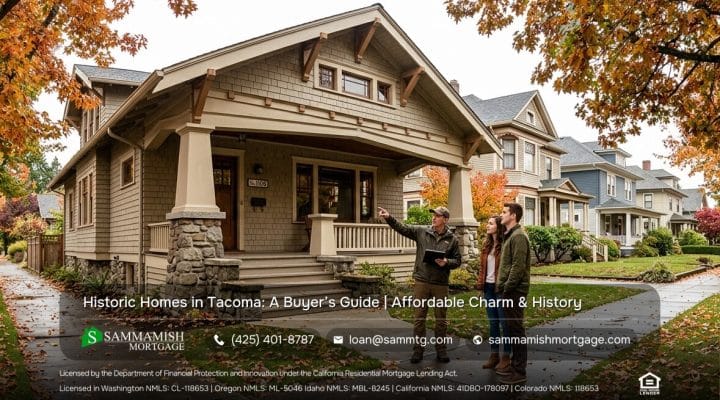
Certain cities in Washington State are notorious for having high home prices, like Seattle, Bellevue, and Kirkland. But there are plenty of other areas that are still within close proximity to big centers like Seattle that are half the price, such as in Tacoma or Federal Way.
Use Sammamish Mortgage’s online systems when searching for a home to compare two things, 1) the median price of homes for each area and 2) the cost of living for each area. The areas with low median prices and that have a lower cost of living are usually easier places to buy a home. If you see something you like, you can get pre-approved all in one spot!
A homebuying partnership can make ownership more affordable, but it also creates shared legal and financial responsibilities. Multi-generational ownership is one example, with family members buying a larger home together and sharing costs. Other buyers may choose to purchase with a friend or another non-relative.
Before moving forward, make sure everyone is aligned on the budget, monthly payment limits, cash contributions, and ongoing responsibilities. It is also important to decide how title and ownership will be structured, who will pay for repairs and maintenance, and what happens if one person wants to move out, sell, stop contributing, or buy out the other owner.
Because co-buying is not a simple affordability shortcut, choose ownership partners very carefully and work with competent legal counsel to create a written ownership agreement before closing.
The best approach depends on what is holding you back most. If your main issue is limited savings, start by comparing low-down-payment options and Washington assistance programs you can verify. If your income is stable but your current area is too expensive, location flexibility or remote-work income may open up more affordable choices. If you have support from family or another trusted buyer, co-buying may help, but only if you can plan the ownership structure and exit terms carefully. And if your challenge is qualifying comfortably, improving credit and reviewing monthly affordability before you shop may be the best first step.
Millennials are challenged with new obstacles when seeking to buy a home. The strongest challenge is the cost of homeownership, especially when considering the cost of properties in various cities across the state of Washington.
However, there are many clever ways to improve the chances of enjoying an affordable ownership situation. Be patient and do not give up. Work with a REALTOR® who understands the challenges and is an expert in the area where you are thinking about buying and with a trusted home mortgage professional to find the best financing options for your situation.
Sammamish Mortgage can help Washington buyers take the next step. We serve clients across Washington, Idaho, Colorado, Oregon, and California. Since 1992, we’ve been providing several mortgage programs and products with flexible qualification criteria to borrowers across the Pacific Northwest. Visit our website to get an instant rate quote, use our online mortgage calculator, or reach out to us if you are ready to get pre-approved for a mortgage.
Yes. Many first-time and younger buyers use low-down-payment loan options instead of waiting to save a full 20% down payment. A larger down payment can reduce the amount borrowed and improve monthly affordability, but it is not the only path to homeownership.
In many cases, yes. If you put down less than 20% on many conventional loans, or use certain other low-down-payment programs, you may need to pay private mortgage insurance or a similar mortgage insurance cost. That added cost can still be worthwhile if it helps you buy sooner with less cash upfront.
Washington buyers may want to review assistance and education resources from the Washington State Housing Finance Commission and HereToHome.org, along with broader first-time buyer programs connected to HUD and other agencies. Availability and program structure can vary, so it is important to confirm current options directly with the program source and your lender.
It may be possible, but it depends on the assistance program, the loan type, and the lender’s rules. Low-down-payment and assistance pathways can work differently depending on whether financing is conventional, government-backed, or paired with another program. Buyers should verify approved uses of funds, eligibility, and lender requirements before relying on assistance.
Eligibility may depend on factors such as first-time buyer status, income, property location, homebuyer education, occupancy requirements, and the loan program being used. Because rules can change and vary by program, buyers should confirm current requirements directly with the program administrator and their lender.
This market discussion says home prices in most places rebounded beyond pre-2008 levels and continue to rise, especially in certain Washington population centers. Conditions can differ by city and neighborhood, so buyers should compare local prices and affordability when deciding where to shop.
Location can make a major difference because prices are much higher in some Washington cities than in others. Buyers who widen their search to lower-cost areas may find more manageable home prices and living costs while still staying within reach of larger employment centers.
It can. Income that is less tied to a specific location may give buyers more flexibility to live in rural or lower-cost areas where home prices are more affordable. That added location flexibility can expand the range of homes that fit a buyer’s budget.
Co-buying can make ownership more affordable, but it also creates shared legal and financial responsibilities. Buyers should agree in advance on budget limits, cash contributions, monthly costs, repairs, title structure, and what happens if one owner wants to move out, sell, or stop contributing. A written ownership agreement prepared with legal counsel is an important step before closing.
A good starting point is to review savings, credit profile, debt management, and monthly affordability, then compare loan options and any assistance programs you may qualify for. Buyers should also verify the source of any down payment funds, understand program rules, and narrow their target locations before moving into the preapproval process.

Our loan officers are ready and waiting to help you apply for your home loan.
Learn more about the people behind Sammamish Mortgage
Whether you’re buying a home or ready to refinance, our professionals can help.
Mortgage Support — 24/7
No Obligation and transparency 24/7. Instantly compare live rates and costs from our network of lenders across the country. Real-time accurate rates and closing costs for a variety of loan programs custom to your specific situation.
Adjust the parameters based on what you want to track